

23 Mar 2026
IndiGo’s Aircraft Financing Strategy: From Leasing to Ownership
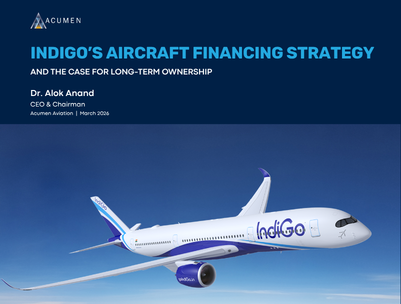
Airlines are often seen as transportation businesses, but in reality, they are deeply tied to capital strategy. The way an airline finances its aircraft can shape its cost structure, balance sheet, and long-term profitability as much as its route network or pricing strategy.
IndiGo, India’s largest airline, has built its dominance on an aggressive sale and leaseback model. But as the airline scales, strengthens its balance sheet, and gains access to global financing markets, that strategy is beginning to evolve.
What does this shift look like, and what does it mean for the future of airline economics?
This paper explores IndiGo’s financing journey across three phases, from asset-light growth to structured financing and the potential move towards aircraft ownership. It also examines how this evolution mirrors strategies adopted by airlines like Ryanair and what it signals for the broader aviation ecosystem.
Inside the paper, you will learn:
How IndiGo used sale and leaseback to scale rapidly with minimal capital
Why leasing becomes less efficient as airlines mature
How structured financing tools like JOLCO reduce cost of capital
The financial differences between leasing, hybrid financing and ownership models
Why large airlines eventually move towards owning a portion of their fleet
How aircraft ownership can create long-term cost and asset advantages
What this shift means for aircraft lessors and aviation investors
For lessors, investors and aviation professionals, this paper provides a clear, finance-led view of how airline capital strategies evolve and why aircraft ownership increasingly becomes a strategic decision, not just an operational one.
Download the full paper to understand how IndiGo’s financing strategy could reshape its long-term economics and position it as a major aviation asset platform.