





20 Mar 2026
Acumen Daily Aviation Brief - 20th March 2026
Acumen Aviation Newsletters
Acumen Aviation’s newsletters offer deep dives into the most impactful trends and developments across the aviation sector. These resources are crafted to keep you informed about critical industry changes and provide actionable insights:
READ NOW: https://www.acumen.aero/blogs
IrishAero News
Buzz Scales Up to 87 Aircraft
Buzz has expanded its fleet to 87 aircraft ahead of the Summer 2026 season as the Ryanair Group carrier continues to strengthen its footprint across Central Europe. The growth includes base expansion in Bratislava, Budapest and multiple Polish bases including Katowice, Kraków, Poznań and Warsaw Modlin, alongside the launch of a new four-aircraft Boeing 737-800 base in Tirana, Albania. The fleet increase also includes the transfer of eight Boeing 737-800 aircraft from parent carrier Ryanair DAC, with the latest aircraft, SP-RNT (c/n 34986), transferred at Nuremberg Airport on 12 February 2026 after previously operating as EI-EPB with Ryanair.
Ryanair Completes 737 MAX Order
The Ryanair Group has taken delivery of the final aircraft from its 210-unit order for Boeing 737 MAX 8-200 ‘Gamechanger’ aircraft, marking a significant milestone in the airline’s fleet expansion programme. The final aircraft, SP-RZX (c/n 67130), was delivered to group subsidiary Buzz from Boeing Field and routed directly to Dublin on 23 February 2026 in full Ryanair livery. The first 737 MAX 8-200 entered the Ryanair network in June 2021 with the delivery of EI-HEN to Ryanair DAC, followed by Malta Air’s first aircraft, 9H-VUE, in July 2021 and Buzz’s first example, SP-RZA, in November 2021.
SAS Connect Bolsters Fleet
Dublin-based SAS Connect, a wholly owned subsidiary of the SAS Group, has added another Airbus A320neo to its expanding fleet, bringing its total aircraft count to 33. The latest aircraft, EI-SCH (Airbus A320-251N, c/n 13083), was delivered from Airbus’s Hamburg-Finkenwerder facility and arrived at Stockholm Arlanda Airport on 5 March as flight SAS9145. Powered by CFM International LEAP-1A26 engines, the aircraft features a 180-seat all-economy configuration designed to support SAS Connect’s efficient short-haul operations across the Scandinavian network.
Aircraft Update
PR-AYW Embraer E195AR Ferried to Ireland West Airport
PR-AYW Embraer E195AR (c/n 19000458) operated by Azul was ferried from Porto to Ireland West Airport on 28 February 2026. The movement likely reflects a transition for maintenance, storage or potential lease repositioning, highlighting the continued fluidity in regional jet placements. As airlines optimize fleet utilisation, such ferry flights remain a key part of managing assets efficiently across different markets and operational requirements.
TF-ISW Boeing 767-316 Returned to Lessor via Goodyear
TF-ISW Boeing 767-316 (c/n 28745) formerly operated by Icelandair was ferried to Goodyear on 6 March 2026 as part of its return to the lessor. The transition marks the end of its operational phase with the airline and reflects ongoing fleet reshaping within the widebody segment. Movements to storage or redelivery locations such as Goodyear remain a common step in lease transitions, as lessors prepare aircraft for potential remarketing, part-out or future redeployment.
Global Aviation News
American Airlines Inaugurates A321XLR Transatlantic Service to Edinburgh
American Airlines has inaugurated its first transatlantic service using the Airbus A321XLR, operating between New York JFK and Edinburgh, marking a significant milestone for long-range narrowbody operations. The launch represents the first time a North American carrier has deployed the A321XLR across the Atlantic and signals a return to single-aisle transatlantic flying for the airline after seven years. Operating daily through October 2026, the route revives a previously served market with greater efficiency, while highlighting how new-generation narrowbody aircraft are reshaping long-haul connectivity by enabling thinner, point-to-point routes between secondary cities.
German Travel Demand Remains Strong Despite Global Uncertainty
German travellers continue to show strong appetite for travel despite ongoing geopolitical tensions, with spending reaching record levels and forward bookings trending positively for summer 2026. Industry leaders note a shift in behaviour, with customers booking earlier and placing greater emphasis on safety, reliability and overall travel quality. Popular destinations such as Spain and the eastern Mediterranean remain in high demand, underscoring the resilience of leisure travel even in uncertain conditions, while also highlighting how closely global events continue to influence travel sentiment and planning.
Flightradar24 Emerges as Key Platform During Aviation Disruptions
Flightradar24 has evolved from a simple traffic visualisation tool into one of the most widely used platforms for tracking global aviation activity, particularly during times of disruption and crisis. Originally created to support a flight comparison website, the platform quickly gained traction as users turned to it for real-time visibility of airspace movements. Today, it plays a central role in how both industry professionals and the public monitor events in the skies, highlighting the growing importance of data transparency and real-time information in modern aviation.
Icelandair Surpasses 5 Million Passengers and Expands Keflavik Network
Icelandair has recorded its strongest year to date, carrying over 5 million passengers in 2025, driven by steady demand and increased connecting traffic through Keflavik. The airline continues to play a pivotal role as a transatlantic connector, with nearly half of its passengers transferring between flights. Building on this momentum, Icelandair plans to launch five new routes from Keflavik in 2026, further strengthening its network. The growth comes alongside ongoing fleet modernisation, as newer aircraft such as the A321LR gradually replace older types, supporting more efficient and flexible operations.
JetBlue Flags Rising Cost Pressures at LaGuardia
JetBlue’s CEO has warned that operating from New York’s LaGuardia Airport has become increasingly uneconomical due to rising infrastructure costs following its redevelopment. The comments highlight a broader concern within the industry, where expensive airport upgrades are driving higher airline fees, particularly impacting low-cost carriers that rely on tight cost structures. The situation raises questions around long-term affordability and competition, as higher operating costs risk being passed on to passengers and could limit the viability of certain routes in key markets.
Jazeera Airways Targets Major Fleet Expansion Following Record Performance
Jazeera Airways is planning a significant fleet expansion, targeting up to 50 aircraft in the coming years as it builds on record financial results and sustained passenger demand. The Kuwaiti low-cost carrier reported its strongest ever performance in 2025, with profits more than doubling year-on-year, supported by disciplined cost control and steady network growth. The expansion signals growing confidence in the regional market and highlights how well-positioned low-cost carriers are to capitalize on demand across the Middle East and beyond.
LATAM Brazil Focuses on Disciplined Growth Amid Tax Concerns
LATAM Airlines Brazil is taking a more measured approach to growth as it adjusts capacity and network strategy in a maturing domestic market. The airline is set to introduce Embraer E2 aircraft from late 2026, with up to 14 expected by 2027, supporting more efficient operations and right-sized capacity deployment. At the same time, the carrier has raised concerns over potential tax reforms, warning they could impact competitiveness and cost structures. The approach reflects a broader industry shift toward disciplined expansion, balancing growth ambitions with economic and regulatory realities.
Generation Z Redefines Travel Priorities and Brand Loyalty
A new industry survey highlights how Generation Z is reshaping travel behaviour, placing greater emphasis on experiences over traditional markers of luxury. The findings point to a shift in spending patterns, with younger travellers opting for cost-effective transport while prioritising high-value experiences such as food, culture and unique activities. The report also suggests weaker brand loyalty compared to previous generations, with preferences driven more by value and relevance than long-term affiliation. This evolving mindset is prompting airlines and travel providers to rethink how they position products and engage with the next generation of travellers.
Lufthansa Group Reports Record Revenue and Profit in 2025
Lufthansa Group has delivered a strong financial performance for 2025, signalling a more stable and disciplined phase for full-service carriers. The group carried around 145 million passengers during the year, up 8% year-on-year, while achieving a record seat load factor of 83.2%. Revenue rose to €39.6 billion, driven by sustained demand, particularly on long-haul routes across Asia and Africa. More importantly, profitability improved meaningfully, with adjusted operating profit reaching €2 billion, up 20% from 2024, and operating margins expanding to 4.9%. With plans to grow capacity by 4% into 2026, Lufthansa’s results reflect a clear shift towards balancing expansion with stronger yield and cost discipline, even amid ongoing geopolitical uncertainty.
Setna iO Expands Portfolio with A319 Acquisition Leased to GlobalX
Setna iO has acquired an Airbus A319-100 aircraft from AE Industrial Partners, with the asset already placed on lease to Global Crossing Airlines (GlobalX). The aircraft, which previously operated with Allegiant Air, has transitioned into GlobalX’s fleet and is expected to support its operations over the next two years. Setna iO will also serve as the asset’s servicer and manager throughout the lease term, highlighting its integrated approach across ownership and lifecycle management. The move reflects continued activity in the mid-life narrowbody leasing space, where demand remains steady for flexible, cost-efficient capacity solutions, particularly among charter and ACMI-focused operators like GlobalX.
Irish Aviation News
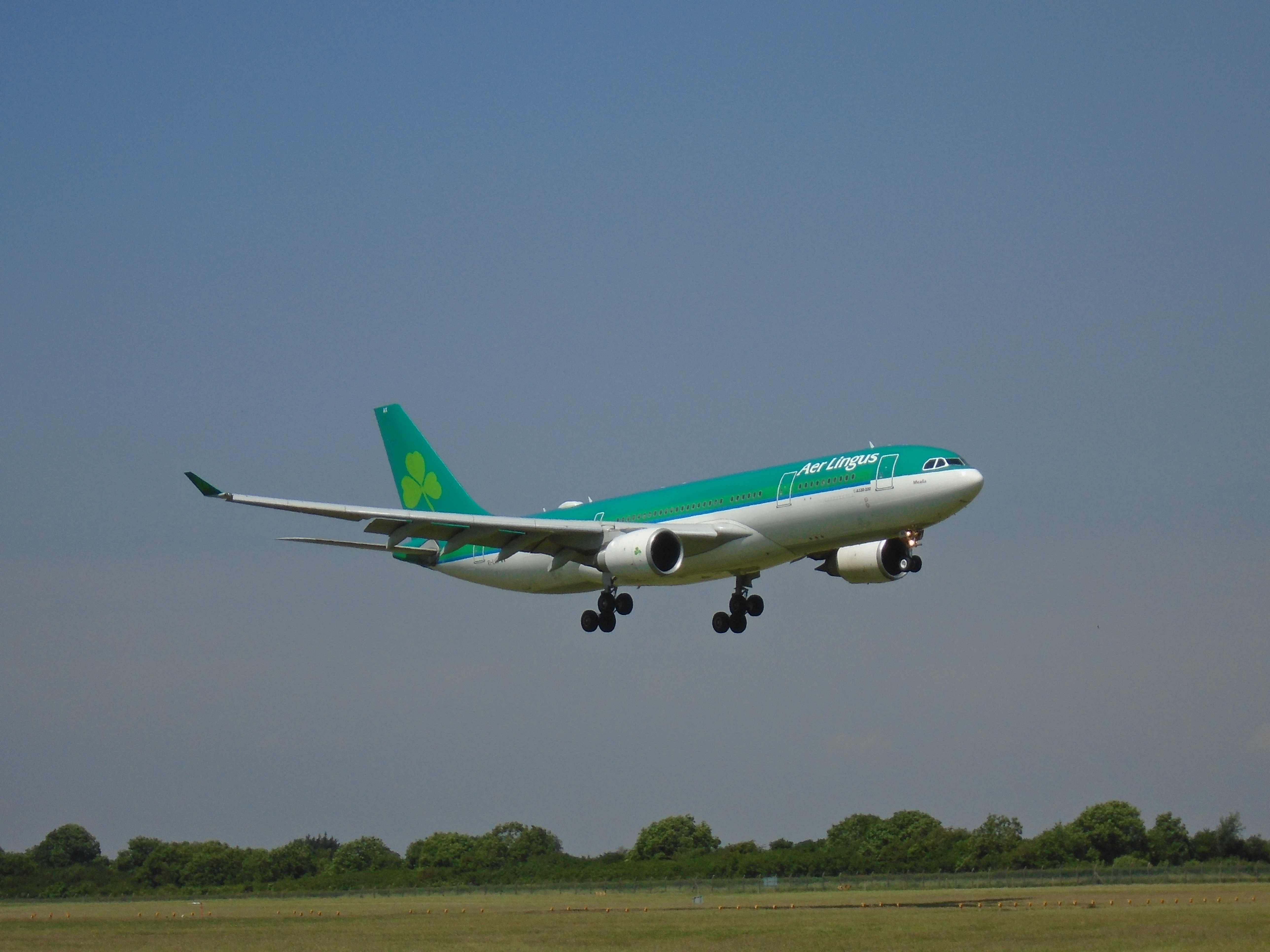
Aer Lingus Celebrates Irish Talent with Oscars Send-Off
Aer Lingus brought a touch of Hollywood to Dublin Airport as it flew the family of Best Actress nominee Jessie Buckley to Los Angeles ahead of the 98th Academy Awards. Marking the occasion in style, the airline rolled out a red carpet send-off for her parents, Marina and Tim Buckley, along with her sister Lily, as they boarded flight EI069 to LA. The gesture reflects Aer Lingus’ continued support for Irish talent on the global stage, turning a routine transatlantic journey into a symbolic moment of national pride as Buckley’s family heads to one of cinema’s biggest nights.
Turkish Airlines Eyes Ireland for Leasing Expansion as AerCap Places Major Airbus Order
Turkish Airlines is exploring plans to establish its own aircraft leasing company in Ireland, a move that reflects the country’s continued dominance as a global hub for aviation finance and leasing. At the same time, AerCap Holdings, the world’s largest aircraft lessor, has reinforced its market position with a landmark order for 100 Airbus A320neo family aircraft, including 23 A320neo and 77 A321neo jets. This marks AerCap’s largest direct order for the type and signals strong confidence in next-generation narrowbody demand. Together, these developments highlight a clear trend: leasing platforms are doubling down on fuel-efficient single-aisle aircraft while strengthening their presence in Ireland to support long-term fleet expansion and global airline requirements.
AFG Aviation Deepens Africa Focus with Strategic Expansion
AFG Aviation Ireland is strengthening its presence across the African aviation market, signalling growing confidence in one of the industry’s fastest-emerging regions. Following successful transactions, including the placement of two CRJ1000 aircraft with Cally Air in Nigeria, the company has seen rising demand from airlines, governments, and aviation authorities across the continent. This surge in engagement has prompted AFG to deploy senior leadership across key African markets, reflecting a more hands-on approach to partnerships and deal execution. The move highlights a broader shift, where lessors and asset managers are increasingly targeting Africa for growth, driven by demand for regional connectivity, fleet modernisation, and tailored financing solutions.
US Delays Decision on Dublin Airport Passenger Cap Dispute
The US government has postponed its decision on potential retaliatory measures against Irish airlines linked to the passenger cap at Dublin Airport, pushing any outcome to at least April 6. The delay eases immediate political pressure, particularly ahead of Taoiseach Micheál Martin’s visit to the White House for St Patrick’s Day. While the issue remains unresolved, it highlights the broader tensions between infrastructure constraints at key European hubs and international aviation agreements, with any future US action likely to have implications for transatlantic capacity and airline operations.
Fingal Community Feedback Shapes Dublin Airport Debate
A recent February 2026 survey capturing the views of Fingal communities highlights the growing complexity around Dublin Airport’s operations and future expansion. The findings reflect a mix of perspectives, with residents acknowledging the airport’s economic importance while raising concerns around noise, traffic congestion, and environmental impact. As discussions around capacity limits and infrastructure development continue, the survey underscores the need for a more balanced approach that aligns aviation growth with community expectations. For policymakers and industry stakeholders, this feedback adds another layer to an already sensitive debate, where operational decisions are increasingly influenced by both economic priorities and local sentiment.
Irish Travel Preferences Shape US Tourism Demand
New insights into Irish travel behaviour highlight the diverse expectations Irish holidaymakers bring to the US market. Data from the U.S. International Trade Administration’s Survey of International Air Travelers shows that preferences vary widely based on age, income, and travel intent, but clear patterns are emerging. Irish visitors are increasingly drawn to experience-led travel, prioritising activities such as cultural exploration, food experiences, shopping, and city-based tourism over traditional sightseeing alone. For tourism boards and airlines, this shift reinforces the importance of positioning destinations around experiences rather than just locations, while also aligning route strategies and partnerships to cater to evolving traveller expectations from Ireland.
Irish Travellers Over 55 Drive Demand for Experiential Travel
New research from JustCover highlights a shift in travel behaviour among older Irish holidaymakers, with 62% of those aged over 55 now seeking adrenaline-fuelled experiences. Popular choices include rail journeys across continents (30%), safaris (24%), and activities like swimming with dolphins (18%), pointing to a growing appetite for active, experience-led travel rather than traditional relaxation-focused trips. At the same time, cost-conscious behaviour remains strong, with 91% of Irish travellers taking steps to manage expenses, including opting for low-cost airlines and travelling with hand luggage only. Spain continues to lead as the top destination, followed by Portugal, Italy, and France, while city breaks and pool holidays remain preferred formats. For airlines and tourism stakeholders, this signals a clear trend: even older demographics are reshaping demand towards more dynamic travel experiences while maintaining price sensitivity.
Tweet Picks
@InFlightMatt Heathrow used 17% of global SAF in 2024 — from a single hub. That was supported by an airport-level incentive scheme to help bridge the cost gap. That’s the real tension: demand is there, but SAF still needs economic support to compete at scale. Until production expands and prices fall, policy mechanisms — not voluntary uptake alone — will drive meaningful adoption.
@krisvancleave Project sunrise promises to link Sydney with london and New York via nonstop marathon service on a special airbus A350ULR (ultra long range).
@krisvancleave The TSA is looking to establish an $18 identity verification fee for flyers who don’t have a complaint Real ID. The agency is installing a new alternative verification system. If the ID is confirmed it would be good for 10 days per $18 fee.
@HofmannAviation Leisure carrier TUI Airline is looking for solutions to increase utilization of its 130-aircraft-strong fleet during the European winter low season when less capacity is needed.
Video Picks
Gulf Crisis Driving Up Air Fares
Rising geopolitical tensions in the Gulf are beginning to show a direct impact on global airfares, as discussed by Eoghan Corry on RTÉ Drivetime. The situation is affecting key flight corridors, forcing airlines to reroute aircraft, increasing fuel burn, and tightening available capacity. What this really means is simple. Higher operating costs are now feeding into ticket prices, especially on long-haul routes that rely on these airspaces. For travellers, this could translate into more expensive fares in the coming months, while for airlines, it adds another layer of complexity to network planning and cost management in an already volatile environment.
Ryanair’s Expansion Strategy in Focus
Ryanair CEO Michael O’Leary outlines the airline’s continued push for growth across Europe, with a strong focus on expanding operations in Poland and other Central and Eastern European markets. The discussion highlights Ryanair’s strategy of leveraging low costs, aggressive capacity deployment, and secondary airport partnerships to stimulate demand. What comes through clearly is the airline’s confidence in sustained passenger growth, even as cost pressures and regulatory challenges persist. For the broader industry, it reinforces a familiar theme: low-cost carriers are still driving market expansion, particularly in regions where air travel demand is catching up with economic growth.
The ‘Arajet Effect’ and a New Americas Connectivity Model
Arajet is positioning itself as a low-cost connector across North, Central, and South America, using the Dominican Republic as a strategic hub. In this conversation, the airline’s leadership outlines a model built on efficient narrowbody operations, underserved routes, and price-led stimulation of demand. What stands out is the focus on creating new traffic flows rather than competing head-on with legacy carriers on established routes. The approach mirrors what we’ve seen in other regions, where low-cost carriers unlock entirely new markets by making air travel accessible, and if executed well, Arajet could reshape intra-Americas connectivity over the next decade.
Acumen’s Take
The current landscape points to a more disciplined phase for aviation, where growth is no longer just about adding capacity but optimising it. Airlines and lessors are aligning fleet strategy, network planning, and cost structures more tightly than before. At the same time, demand remains resilient, but it is evolving, with travellers prioritising value and experience over traditional patterns. Technology and data are also playing a larger role in decision-making, from operations to customer engagement. The balance between growth, efficiency, and adaptability will define how the industry moves forward.